Tumba rhythm
Tumba is the national musical genre of Curaçao and one of the island's most celebrated artistic traditions. Its unmistakable rhythmic energy, powerful orchestration, and expressive vocal tradition have made it the musical heartbeat of Carnival while simultaneously establishing it as one of the country's strongest symbols of cultural identity.
The rhythm emerged through centuries of interaction between African musical traditions, European harmonic practices, and local Curaçaoan creativity. Rather than preserving one specific African musical culture, Tumba reflects the meeting of multiple traditions that converged on the island during the colonial period.
One of the defining characteristics of Tumba is its ability to evolve without losing its identity. Throughout its history, new instruments, performance techniques, harmonic approaches, and orchestral arrangements have been incorporated into the genre. Yet despite these developments, its rhythmic foundation remains unmistakably Afro-Curaçaoan.
Unlike many musical genres that can be described primarily through notation, Tumba exists as both a written and oral tradition. Its rhythmic subtleties, groove, ensemble interaction, and stylistic interpretation are transmitted through performance, observation, mentorship, and community participation.
For generations of Curaçaoans, Tumba has served as a musical language through which communities celebrate, compete, remember, and express themselves. Today it continues to develop through new composers, arrangers, performers, educators, and researchers, balancing continuity with innovation.
Origins & Historical Background
The origins of Tumba are deeply intertwined with the history of Curaçao and the cultural transformations that shaped the island over several centuries. Rather than emerging at a single moment, Tumba developed gradually through the interaction of African musical traditions, European musical practices, and local Curaçaoan creativity.
During the transatlantic slave trade, thousands of Africans were forcibly brought to Curaçao from various regions of West and Central Africa. Gregory Colina identifies important cultural influences from present-day Ghana, Togo, Benin (formerly Dahomey), Nigeria, Guinea, Côte d'Ivoire, and the Congo region. These communities represented diverse cultural traditions, including the Yoruba, Fon (Dahomey), Ewe, Akan, and Bantu peoples, each contributing musical knowledge that would later become part of Curaçao's cultural identity.
Although these communities spoke different languages and came from different societies, they shared musical principles that survived displacement and slavery. Concepts such as cyclical rhythmic organization, timeline patterns, call-and-response singing, layered percussion, collective performance, and improvisation continued to be practiced and gradually merged into new Afro-Curaçaoan musical traditions.
Over time, these African musical foundations encountered European harmonic practices, military bands, church music, and local popular traditions. Rather than replacing one another, these influences blended to create new musical forms unique to Curaçao. Tumba emerged as one of these distinctly Curaçaoan expressions, combining African rhythmic thought with European harmonic language and local artistic innovation.
During the twentieth century, Curaçao's close relationship with Cuba further influenced the development of the genre. Curaçaoan workers who traveled to eastern Cuba returned with new musical ideas and instruments, including the conga, bongó, timbales, and campana (cowbell). These instruments gradually became integrated into Tumba ensembles, enriching the sound of the genre while preserving its Afro-Curaçaoan rhythmic foundations.
Today, Tumba is recognized as Curaçao's national musical genre and remains one of the island's most important cultural traditions. Its historical development reflects not only the resilience of African musical heritage but also the creative ability of Curaçaoan musicians to transform diverse cultural influences into a musical language that is entirely their own.
Development Over Time
Since its emergence as an Afro-Curaçaoan musical tradition, Tumba has continuously evolved while preserving the rhythmic identity that defines the genre. Rather than remaining fixed, it has adapted to changing musical tastes, new instruments, technological advances, and the creativity of successive generations of musicians.
The earliest forms of Tumba were rooted primarily in percussion, voice, and community participation. As Curaçao's musical landscape developed, European harmonic traditions and orchestral practices gradually became integrated into the genre. Brass instruments, piano, bass, and more sophisticated arrangements expanded Tumba's musical vocabulary while maintaining its Afro-Curaçaoan rhythmic foundation.
One of the most significant periods of development occurred during the first half of the twentieth century, when many Curaçaoans traveled to eastern Cuba to work in the sugar industry. Upon returning home, musicians introduced instruments such as the conga, bongó, timbales, and campana (cowbell), together with new performance techniques that would permanently influence the sound of Tumba. These additions enriched the rhythm section without replacing traditional Curaçaoan elements such as the wiri, which remains an essential component of the ensemble.
The establishment of the Festival di Tumba in 1971 marked another important milestone in the genre's evolution. The festival created an annual platform for composers, arrangers, singers, and orchestras to present new Tumba compositions, encouraging musical innovation while strengthening the genre's role within Curaçao's Carnival traditions. Over time, orchestras became larger, arrangements more sophisticated, and performance standards increasingly professional.
According to percussion educator and researcher Gregory Colina, the evolution of Tumba can also be heard in the rhythm section itself. Conga performance gradually incorporated influences from salsa and later merengue, timbales patterns developed new approaches, bass drum interpretations changed across different decades, and cowbell performance became more refined. These developments illustrate that Tumba is not defined by a single fixed rhythmic formula but by a living performance tradition that continues to evolve.
Today, Tumba embraces both tradition and innovation. Contemporary composers and performers continue to explore new harmonies, orchestration, recording techniques, and stage production while remaining connected to the rhythmic principles that have shaped the genre for generations. This ability to adapt without losing its identity has ensured Tumba's continued relevance and has secured its place as one of Curaçao's most enduring musical traditions.
| Period | Development |
|---|---|
| 17th–19th centuries | African musical traditions form the rhythmic foundations of Tumba. |
| 19th century | African and European musical influences continue to merge within Curaçao. |
| 1930s–1950s | Migration between Curaçao and Cuba introduces congas, bongós, timbales, and cowbells. |
| 1971 | Festival di Tumba is established, providing a national platform for composers and performers. |
| 1970s–1990s | Evolution of conga technique, bass drum patterns, timbales, and cowbell performance practice. |
| Present | Tumba continues to evolve through new compositions, orchestration, education, and research. |
Evolution
Tumba has never been a static musical tradition. Its history is one of continuous adaptation in which new instruments, performance techniques and artistic ideas were incorporated without losing the rhythmic identity that distinguishes the genre. Understanding this evolution helps explain why Tumba remains both historically rooted and musically contemporary.
African Foundations
The earliest foundations of Tumba lie in the musical systems carried to Curaçao by enslaved Africans from West and Central Africa. Rather than preserving one culture intact, rhythmic ideas from Yoruba, Fon, Ewe, Akan and Bantu traditions interacted on the island and gradually formed a new Afro‑Curaçaoan musical language.
Nineteenth Century
Throughout the nineteenth century, local musical traditions continued to develop through interaction between African rhythmic practice and European harmonic traditions. Community celebrations, social gatherings and public festivities provided spaces where these musical ideas matured into recognizable Curaçaoan forms.
The Cuban Connection
During the first half of the twentieth century many Curaçaoans worked in eastern Cuba. Their return brought important musical influences, including the conga, bongó, timbales and campana (cowbell). These instruments expanded the sound of Tumba while preserving its Afro‑Curaçaoan rhythmic foundation.
The Festival Era
The creation of Festival di Tumba in 1971 marked the beginning of a new chapter. Annual competitions encouraged composers, arrangers and orchestras to experiment artistically while giving Tumba national visibility. The festival accelerated musical innovation without replacing earlier traditions.
Changing Performance Practice
Gregory Colina demonstrates that the rhythm section itself documents the evolution of Tumba. Conga playing absorbed salsa and later merengue techniques, timbales patterns changed, bass drum interpretations evolved through successive decades, and cowbell performance became increasingly refined. These developments illustrate that performance practice has its own history alongside the history of compositions.
Contemporary Tumba
Today's Tumba combines historical continuity with artistic innovation. Modern orchestras employ sophisticated arrangements, expanded brass sections, advanced recording techniques and contemporary stage production while remaining grounded in the rhythmic principles inherited from earlier generations.
Looking Ahead
The future of Tumba depends upon documentation, education and performance. Research projects, masterclasses, instrument makers, schools and initiatives such as EncycloRhythm contribute to preserving the tradition while making it accessible to future generations. By documenting both history and performance practice, the genre can continue to evolve without losing its cultural identity.
Chronological Overview
| Period | Major Development |
| 17th–19th centuries | African musical traditions establish rhythmic foundations on Curaçao. |
| Early 20th century | Interaction with European orchestral practices continues. |
| 1930s–1950s | Migration between Curaçao and Cuba introduces new instruments and performance ideas. |
| 1971 | Festival di Tumba established, giving the genre a national platform. |
| 1970s–1990s | Evolution of congas, timbales, bass drum and cowbell performance practice. |
| Today | Tumba continues to evolve through performers, educators and researchers. |
Cultural Heritage
African Heritage
Tumba is far more than a musical genre; it is one of the most powerful expressions of Curaçao's cultural identity. Through its rhythms, lyrics, performances, and traditions, Tumba tells the story of a people whose history has been shaped by resilience, cultural exchange, and artistic innovation. It represents the living legacy of generations who transformed diverse cultural influences into a uniquely Curaçaoan musical tradition.
The cultural heritage of Tumba is rooted in the experiences of the African diaspora. Musical knowledge brought to Curaçao by enslaved Africans from West and Central Africa survived through oral tradition, communal performance, and cultural memory. Over time, these African musical principles merged with European musical practices and local creativity, giving rise to a musical language that belongs uniquely to Curaçao. This process of adaptation demonstrates how cultural traditions can evolve while preserving their essential identity.
Language plays a central role in the cultural significance of Tumba. Most compositions are performed in Papiamentu, allowing the genre to communicate directly with the people of Curaçao. Through its lyrics, Tumba captures everyday life, humor, celebration, love, social commentary, political reflection, and national pride. As a result, each generation of Tumba compositions becomes a musical record of the island's evolving society.
For many Curaçaoans, Tumba is inseparable from Carnival, one of the island's most important cultural celebrations. The annual Festival di Tumba has become a national institution, encouraging composers, arrangers, performers, and orchestras to create new works while celebrating the richness of Curaçaoan musical heritage. Although the festival has played a significant role in the genre's modern development, Tumba extends far beyond Carnival. It is performed at concerts, cultural festivals, educational programs, official ceremonies, and community events throughout the year.
Tumba also serves as a bridge between generations. Experienced musicians, educators, and instrument makers pass their knowledge to younger performers through rehearsal, mentorship, workshops, and performance. This continuous exchange ensures that the tradition remains alive while allowing each generation to contribute new ideas and artistic perspectives.
Beyond Curaçao, Tumba has become an ambassador of the island's culture. International performances, cultural exchanges, educational initiatives, and research projects have introduced audiences around the world to Curaçao's rich musical heritage. As interest in Caribbean music continues to grow, Tumba contributes to a broader understanding of the creativity and cultural resilience of the African diaspora.
Today, Tumba remains a living tradition that continues to evolve while honoring its historical foundations. Its ability to unite communities, celebrate cultural identity, inspire artistic innovation, and preserve collective memory has secured its place as one of Curaçao's most treasured cultural expressions. Through continued performance, education, research, and documentation, Tumba will remain an essential part of the island's heritage for generations to come.
Musical Characteristics
Tumba is distinguished not by a single rhythmic pattern but by a complete musical system. Its identity emerges through the interaction of pulse, meter, timeline, groove, melody, harmony, orchestration and performance practice. These elements function together to create the unmistakable sound associated with Curaçao's national rhythm.
Pulse
At the foundation of every Tumba performance lies a steady pulse. This pulse is the common reference shared by every performer in the ensemble. While listeners often perceive the percussion as carrying the rhythm, every instrument—including bass, piano, brass and vocals—depends upon this underlying pulse to maintain cohesion.
Compound Meter (6/8)
Tumba is performed in compound 6/8 meter. Gregory Colina explains that the six eighth notes are grouped into two beats of three subdivisions each. This organization distinguishes Tumba from simple duple meters and gives the music its characteristic rolling motion. Although 6/8 also appears in European classical music, Tumba interprets the meter with a distinctly Afro‑Caribbean feel, greater forward momentum and stronger rhythmic interaction.
Subdivision
Understanding subdivision is essential to understanding Tumba. Every beat is internally divided into three equal parts, allowing musicians to place accents, syncopations and responses with great precision. Experienced performers internalize these subdivisions, enabling them to improvise freely while remaining connected to the ensemble.
Timeline
One of the defining features of Tumba is its timeline-based organization. Rather than treating the bell as accompaniment, the timeline functions as a structural reference around which the remaining instrumental parts are organized. Gregory Colina demonstrates this concept through African bell patterns, showing how recurring timeline figures guide ensemble interaction.
Layered Rhythm
The rhythmic texture of Tumba is created through interlocking layers. Congas, timbales, bass drum, cowbell, wiri and melodic instruments each perform complementary roles. None of these patterns alone defines the rhythm; together they create the groove that listeners immediately recognize as Tumba.
Syncopation
Syncopation is one of the most recognizable characteristics of Tumba. Accents frequently occur between the principal beats, creating tension and forward motion. This rhythmic displacement gives the music vitality while maintaining a stable underlying pulse.
Groove
Groove is the collective result of precise rhythmic interaction between performers. It cannot be attributed to one instrument alone. Instead, it emerges when every member of the ensemble shares the same interpretation of pulse, subdivision and timeline. Groove is therefore both a technical and social achievement, requiring attentive listening and continuous communication.
Melody and Harmony
Although rhythm forms the foundation of Tumba, melody and harmony are equally important. Vocals, brass and piano contribute melodic identity, while harmonic progressions enrich emotional expression without overshadowing the rhythmic framework. Rather than competing with rhythm, melody and harmony reinforce it.
Musical Form
Modern Tumba compositions generally include an introduction, verses, refrains, instrumental passages and a climactic conclusion. These formal sections are connected through continuous rhythmic flow, ensuring that structural changes never interrupt the groove.
Ensemble Interaction
Tumba is fundamentally ensemble music. Every performer listens, responds and adapts to the others throughout the performance. Visual cues, rhythmic accents, dynamics and body language all contribute to musical communication. Technical accuracy alone is insufficient; successful performance depends upon collective awareness and cooperation.
Summary
The musical identity of Tumba cannot be reduced to notation alone. It is the product of centuries of musical development, African rhythmic thought, Curaçaoan creativity and living performance practice. Understanding these principles provides the foundation for studying its instrumentation, evolution and interpretation.
Instrumentation
The sound of Tumba is created through the interaction of an ensemble rather than the prominence of a single instrument. Every instrument fulfills a distinct musical function while contributing to the collective groove. Over time the instrumentation expanded as Curaçaoan musicians incorporated Cuban instruments into local performance practice without abandoning the rhythmic principles that define the genre.
The Rhythm Section
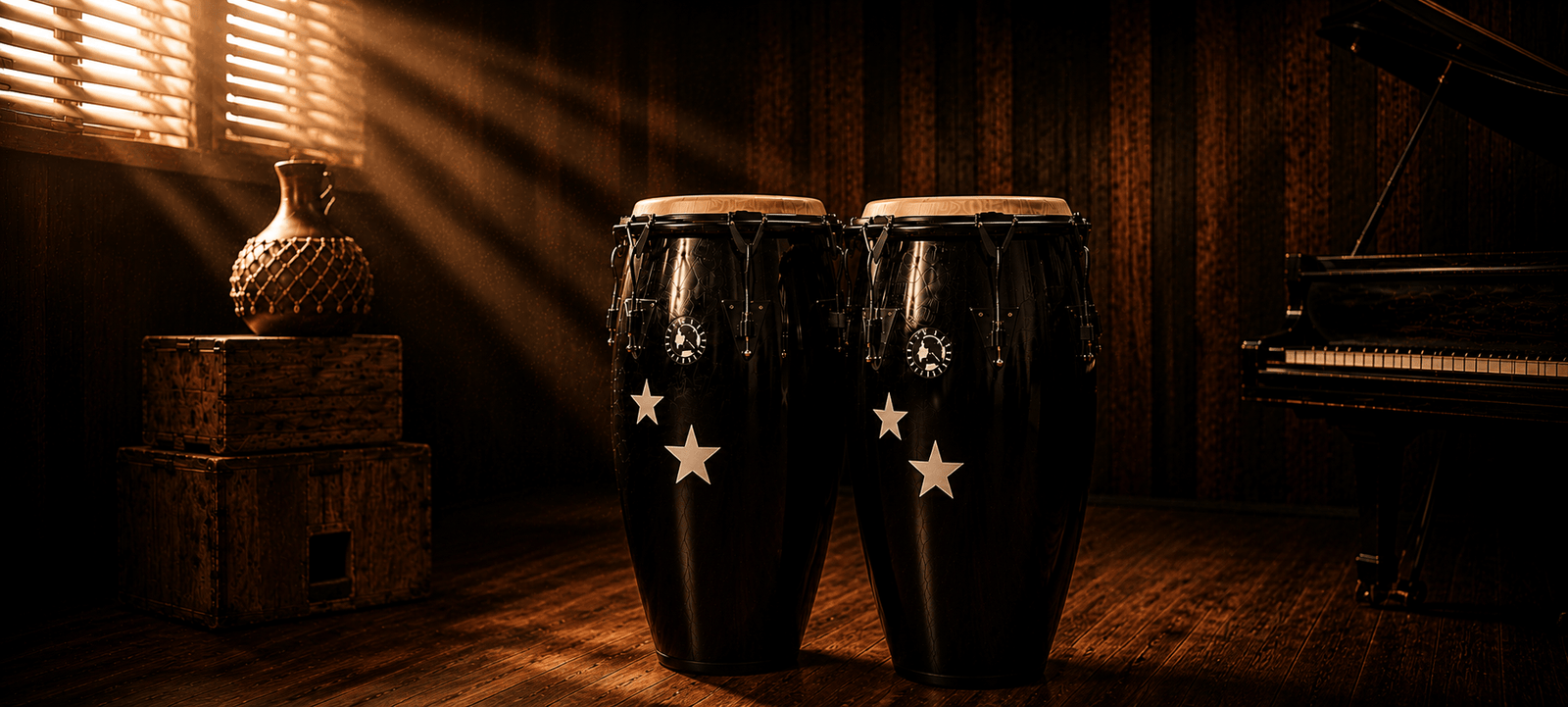
The rhythm section forms the foundation of the Tumba orchestra. Congas, timbales, bass drum (bombo), cowbell, wiri and auxiliary percussion establish pulse, reinforce the timeline and generate the groove that supports singers, dancers and melodic instruments. Gregory Colina demonstrates that this rhythm section has evolved throughout the twentieth century, reflecting changes in performance practice rather than fixed traditions.
Timbales
The timbales occupy a central role in the modern Tumba orchestra. Beyond marking time, the timbalero shapes transitions, introductions, endings, fills and dynamic changes. The timbalero constantly communicates with the rest of the ensemble, helping guide the musical flow. Gregory's demonstrations show that timbales patterns have changed over the decades, making their evolution an important part of Tumba history.
Bass Drum (Bombo)
The bass drum deserves special attention because its role in Tumba differs from a simple timekeeper. Working together with the timbales, the bombo gives weight, power and direction to the ensemble. Gregory Colina demonstrates that the bass drum pattern is not fixed: it evolved over time, with identifiable approaches associated with the early Festival era, Boy Dap's calypso-influenced interpretation around 1979, later off-beat interpretations in the 1990s, and contemporary practice. This historical development makes the bass drum one of the defining features of modern Tumba performance.
Cowbell (Campana)
The cowbell provides the ensemble with rhythmic orientation through recurring timeline figures. Gregory explains that contemporary performers often use different bell sounds or registers to distinguish between more open passages and sections that tighten the musical energy. The bell functions as a structural guide for the entire orchestra rather than simply adding percussion colour.
Congas
The congas contribute both rhythmic stability and expressive dialogue. Open tones, slaps, muted strokes and bass tones allow performers to shape complex rhythmic phrases while remaining connected to the groove. Gregory documents how conga performance evolved during the late twentieth century through the incorporation of salsa and merengue-inspired techniques, illustrating that Tumba performance practice continues to change across generations.
Wiri
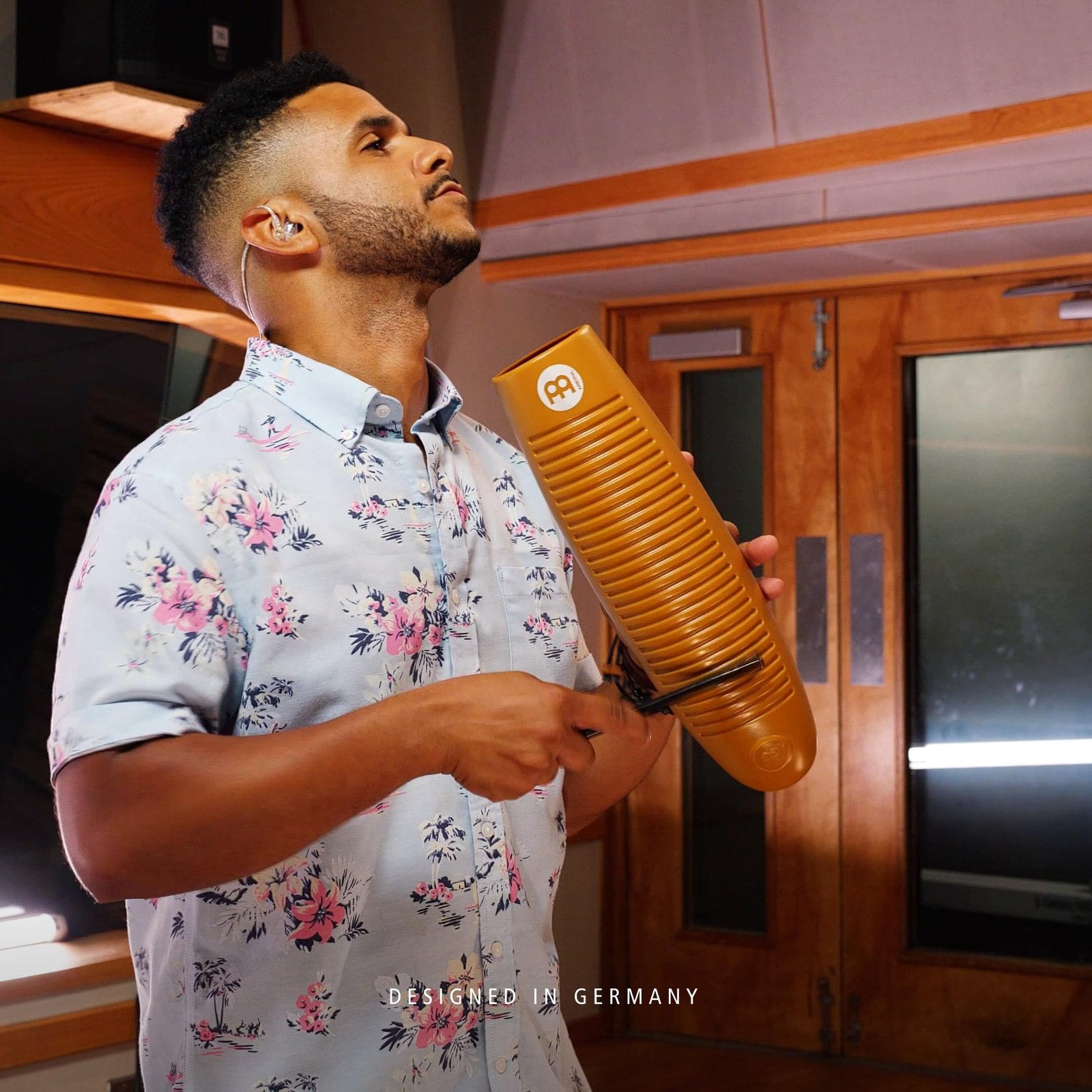
The wiri is one of the signature sounds of Curaçaoan music. Although modest in appearance, its scraping texture strengthens the rhythmic fabric of the ensemble and contributes a distinctly local identity that remained even as Cuban instruments entered the orchestra.
Piano and Bass
The piano connects harmony with rhythm through syncopated accompaniment, while the bass links harmonic movement to the rhythmic pulse. Together they create the harmonic foundation upon which the percussion and melodic instruments interact.
Brass Section
Trumpets, trombones and saxophones provide melodic identity, harmonic colour and dramatic intensity. Rather than dominating the rhythm section, the brass participates in the same rhythmic dialogue, reinforcing accents and responding to the groove established by the percussion.
Vocals
Lead and background vocals transform Tumba from instrumental music into storytelling. Sung primarily in Papiamentu, the lyrics communicate celebration, social commentary, humour, identity and Carnival spirit. Background vocals strengthen communal participation through call-and-response and harmonic support.
Instrumentation as a Living Tradition
The instrumentation of Tumba has never been static. New instruments and techniques have been adopted throughout its history, yet the underlying rhythmic principles remain consistent. This balance between continuity and innovation is one of the defining characteristics of Curaçao's national rhythm.
Related Instruments
Performance Practice
Tumba is more than a written composition. Its identity comes alive through performance. While notation provides a structural framework, the groove, energy, dynamics and interaction between musicians are learned through listening, rehearsal and participation. Performance practice therefore forms an essential part of understanding the genre.
The Ensemble as a Conversation
Unlike traditions that focus on individual virtuosity, Tumba depends upon collective performance. Every musician listens continuously to the others, responding through rhythm, dynamics and phrasing. Congas, timbales, bass drum, cowbell, piano, bass, brass and vocals function as participants in an ongoing musical conversation.
The Role of the Timbalero
Within many contemporary orchestras, the timbalero plays a leading musical role. Beyond performing rhythmic patterns, the timbalero introduces sections, signals transitions, shapes endings, prepares climaxes and communicates visual cues to the ensemble. Gregory Colina's demonstrations highlight how the timbalero guides the flow of the performance while remaining integrated within the groove.
Groove and Feel
A defining characteristic of Tumba is its groove. Groove is not created by one instrument but emerges from the precise interaction of all performers. Timing, articulation, balance and shared interpretation of the pulse determine whether the music feels convincing. This collective feel cannot be fully captured through notation alone.
Improvisation
Improvisation exists within clearly understood stylistic boundaries. Percussionists vary their patterns, pianists elaborate accompaniment, brass players ornament melodic lines and singers adjust phrasing, yet all remain connected to the rhythmic framework. Creativity strengthens the tradition without replacing it.
Evolution of Performance Practice
Gregory Colina demonstrates that Tumba performance has changed considerably over time. Conga technique incorporated salsa and later merengue influences, timbales patterns evolved, bass drum interpretations shifted between historical periods, and the use of the cowbell became increasingly refined. These developments illustrate that Tumba remains a living tradition whose performance practice continues to evolve.
Learning the Tradition
Historically, musicians learned Tumba through observation, rehearsal and participation rather than formal notation. Today, recordings, educational institutions and masterclasses complement oral transmission, but direct interaction with experienced performers remains indispensable for understanding the subtle timing and stylistic nuances of the genre.
Performance Today
Modern Tumba performances appear in Carnival competitions, concerts, educational programs and international cultural presentations. While orchestration and technology have evolved, successful performances continue to be defined by rhythmic precision, ensemble unity, expressive communication and respect for the tradition's Afro‑Curaçaoan foundations.
Dance
Music and dance have always been inseparable within Tumba. The rhythmic structure encourages movement, and dancers respond not only to the pulse but also to syncopation, accents, breaks and dynamic changes created by the ensemble. During Carnival, choreography, procession and audience participation transform Tumba into a shared cultural experience rather than a performance observed from a distance.
Unlike highly codified partner dances, Tumba allows room for individual expression while remaining connected to the collective groove. The dialogue between musicians and dancers reflects the African principle that rhythm is experienced physically as well as aurally.
Listening Guide
For listeners unfamiliar with Tumba, several musical characteristics immediately distinguish the genre.
Listen first for the compound 6/8 pulse. Rather than a straight duple feel, the rhythm flows in two large beats subdivided into groups of three.
Next, identify the interaction of the rhythm section. The congas, timbales, bass drum, cowbell and wiri rarely duplicate one another. Instead, they interlock to create a continuous groove.
Notice the relationship between percussion and melody. Brass arrangements, vocals, piano and bass reinforce the rhythmic structure rather than floating independently above it.
Finally, pay attention to the dynamics of the performance. Introductions, fills, transitions and endings reveal the leadership of the rhythm section and the close communication among performers.
Recommended Listening
The EncycloRhythm digital platform will gradually include representative recordings illustrating historical and contemporary interpretations of Tumba. Whenever possible, examples should include Festival di Tumba performances, educational demonstrations and historical recordings that document changes in orchestration and performance practice across different decades.
Tumba 2026: Amos "AmoreusZ" Balentin - Tin hende bon Hende. - ICONS
This is just a test audio file only for the purpose of designing the single post template for the rhythms. We do not own the rights of this production.
Video Recordings
Rei Di Tumba 2026 | Charelson Sontje Mercelina | Awe Tami So Kubo | ERA | Festival Di Tumba 2026
Watch VideoThis is just a test youtube video only for the purpose of designing the single post template for the rhythms. We do not own the rights of this production.
Notation and Musical Examples
Notation provides an important visual representation of Tumba but should always be understood alongside audio and video. Future versions of this article will include annotated examples of the timeline, conga patterns, timbales figures, bass drum variations, cowbell patterns and complete ensemble excerpts linked directly to synchronized recordings
Supporting documents
Tumba test doc
Open DocumentThis is a test document only for the purpose of designing the single post template for the rhythms.
Gallery
Related Rhythm
Tumba belongs to a broader family of Afro-Caribbean musical traditions. Readers interested in its historical and musical context are encouraged to explore Tambú, Seú, Bembé, Soli, Jambaloo and other rhythms documented within EncycloRhythm. Comparative study reveals both shared African principles and the unique developments that distinguish each tradition.
Related Region

Evidence & Sources
This article represents a synthesis of primary and secondary research. The current edition draws upon Gregory Colina's teaching and masterclasses, historical documentation relating to Curaçaoan music, and the ongoing research undertaken for EncycloRhythm. Future editions will expand the bibliography with archival documents, recordings, interviews, notation sources and academic publications.
Supporting documents