Conga
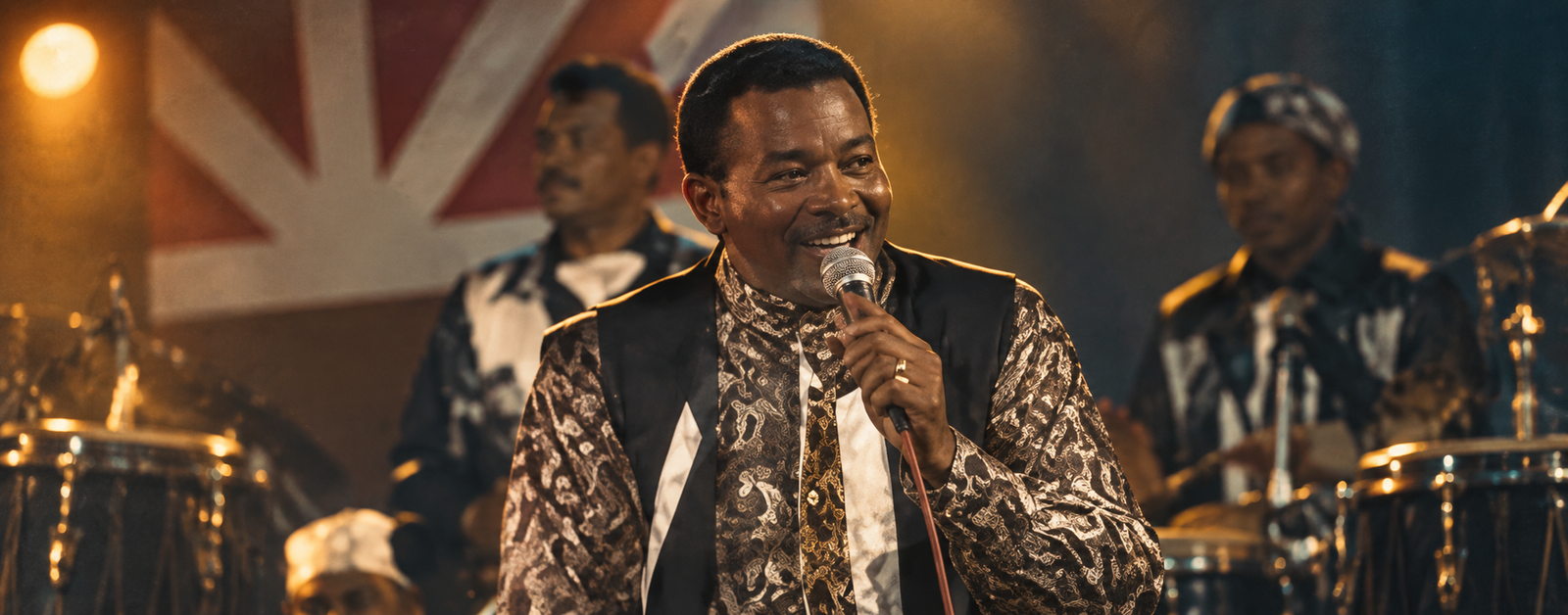
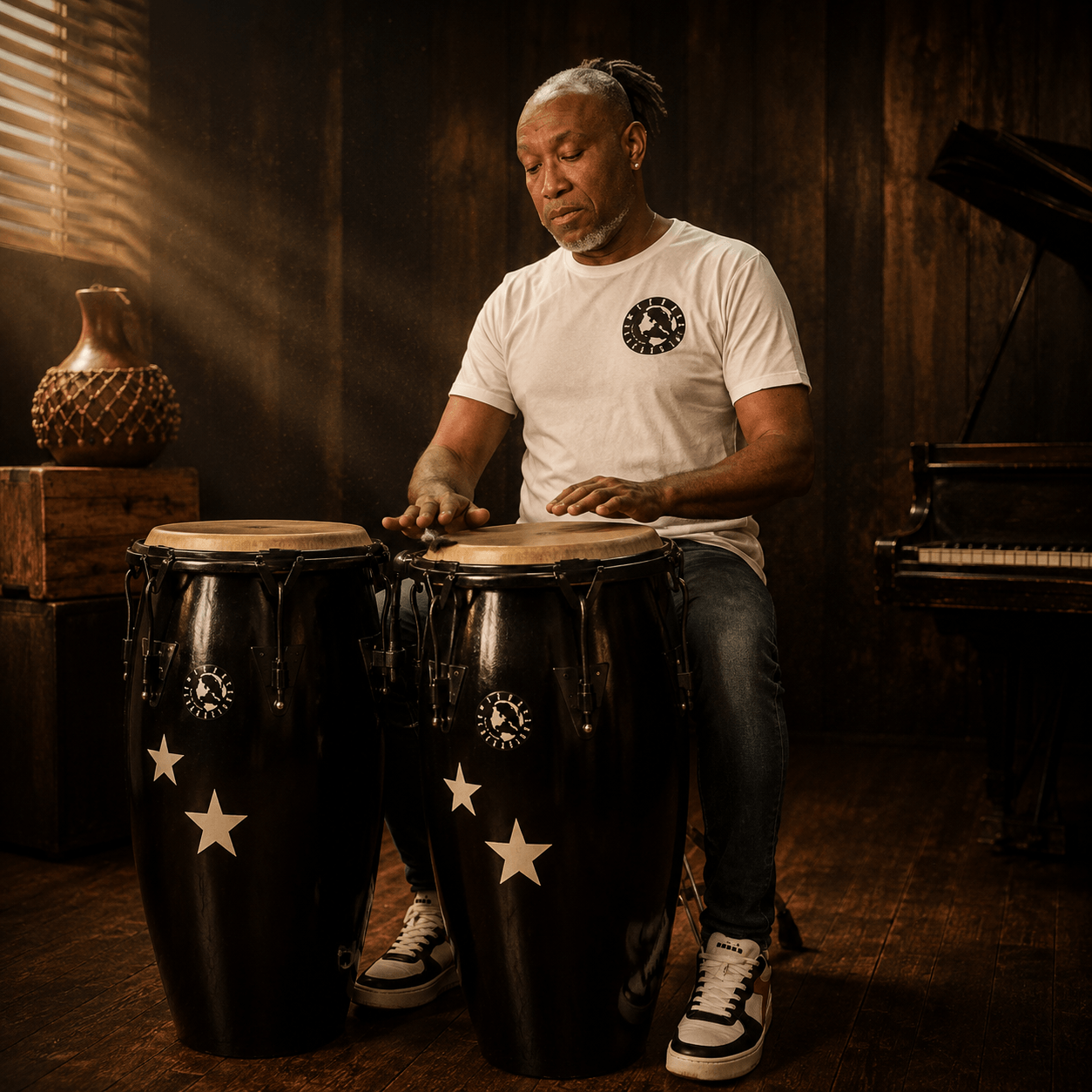
The conga is a tall, narrow, single-headed hand drum of Afro-Cuban development. Its combination of resonant bass tones, open tones, slaps, muted strokes, and finger articulations gives it a wide expressive range. Congas may be played individually, but professional players commonly combine two or more drums of different sizes and pitches. Across the Caribbean and Latin diaspora, the instrument can function as both a stable rhythmic foundation and an improvisational voice.
Instrument Classification
Instrument Family:
Instrument Type:
Playing Technique:
Sound Production:
Hornbostel–Sachs Classification:
Primary Material
Origins & Historical Background
Construction
A conga has a tall hollow shell that narrows toward the lower end. Traditional shells are assembled from curved wooden staves, while many contemporary instruments use fiberglass. A single head is mounted over the top and tensioned with a metal hoop, lugs, and tuning hardware. Different drum sizes produce contrasting pitch ranges; common ensemble names include quinto for a smaller, higher drum and tumba for a larger, lower drum. The open bottom allows the shell to project and reinforce the head’s vibration.
Playing technique
The player uses palms, fingers, and fingertips to create a vocabulary that includes bass tones, open tones, slaps, muted tones, heel-tip motions, and combinations of these strokes. In ensemble playing, the conguero balances repetition with variation, locking into the bell, bass, and other percussion while adding fills or conversational responses. Multiple congas allow patterns to move between pitches without abandoning the underlying groove.
Cultural Significance
The conga is one of the most recognizable instruments of Afro-Cuban and broader Latin music. It has become a musical bridge linking African-derived rhythmic concepts, Cuban performance practice, jazz, salsa, Caribbean dance music, and global popular styles. In Curaçao, congas became part of the expanding twentieth-century percussion language of modern Tumba, where musicians adapted Cuban-derived techniques to a distinctly Curaçaoan rhythmic system.