
Mazurka rhythm
Mazurka is a music and dance tradition originating in Poland. Its characteristic three-beat organisation and expressive accents helped it become recognisable far beyond its original setting.
The name encompasses several connected practices: Polish traditional dancing, nineteenth-century ballroom music, composed piano works and regional adaptations developed elsewhere. These share a historical foundation while differing in tempo, movement and musical interpretation.
Origins & Historical Background
Mazurka’s roots lie in Polish traditional music and dance, particularly its connections with Mazovia. Its musical background includes the mazur, kujawiak and oberek, related dances with different qualities of pace and movement.
The tradition developed through dancing and music-making before becoming an international ballroom fashion. Its identity rests partly in the placement of accents, which can give the second or third beat particular emphasis within a three-beat measure.
These features distinguish Mazurka from simply any dance written in triple time. [1] [2]
Development Over Time
During the nineteenth century, Mazurka became established in European ballrooms and composed music. Its circulation extended through centres such as Paris and London.
Frédéric Chopin gave the genre a major place in piano repertoire. His mazurkas transformed dance-related ideas through individual choices of harmony, texture and musical form.
Beyond Europe, documented adaptations include Martinique, the southern Caribbean, Hispanic New Mexico and the Philippines. Each setting incorporated Mazurka into a different musical and social environment. [3] [4] [5] [6]
Evolution
From Traditional Dance to Ballroom Repertoire
Mazurka changed as it moved between rural practices and formal social dancing. Its steps and presentation adapted to different settings.
From Dance Music to Piano Composition
Concert works explored possibilities beyond accompanying dancers. They could retain recognisable rhythmic gestures while developing a more personal musical language.
Regional Adaptation
Communities outside Poland reshaped the tradition through their instruments, phrasing and movement. These adaptations became part of local repertoires rather than remaining unchanged imports.
Cultural Heritage
Mazurka connects Polish cultural expression with a wider history of musical travel.
Its regional adaptations also preserve the creativity of communities that adopted it. A Martinican recording, a Philippine dance and a Polish piano composition offer different evidence of how inherited material can acquire new meanings.
Musical Characteristics
Triple Meter
Mazurka is generally organised in three beats, often notated in 3/4. Counting the beats provides a starting point for hearing its structure.
Accent and Rhythmic Gesture
Emphasis may fall on the second or third beat. Short note pairs, dotted figures and changes in articulation can contribute to its distinctive character.
Contrasting Pace
The broader Polish dance family includes slower, more flowing movement and faster, turning movement. Tempo alone does not define the tradition; accent, phrasing and choreography also matter. [1] [2]
Instruments
Mazurka has no single international ensemble.
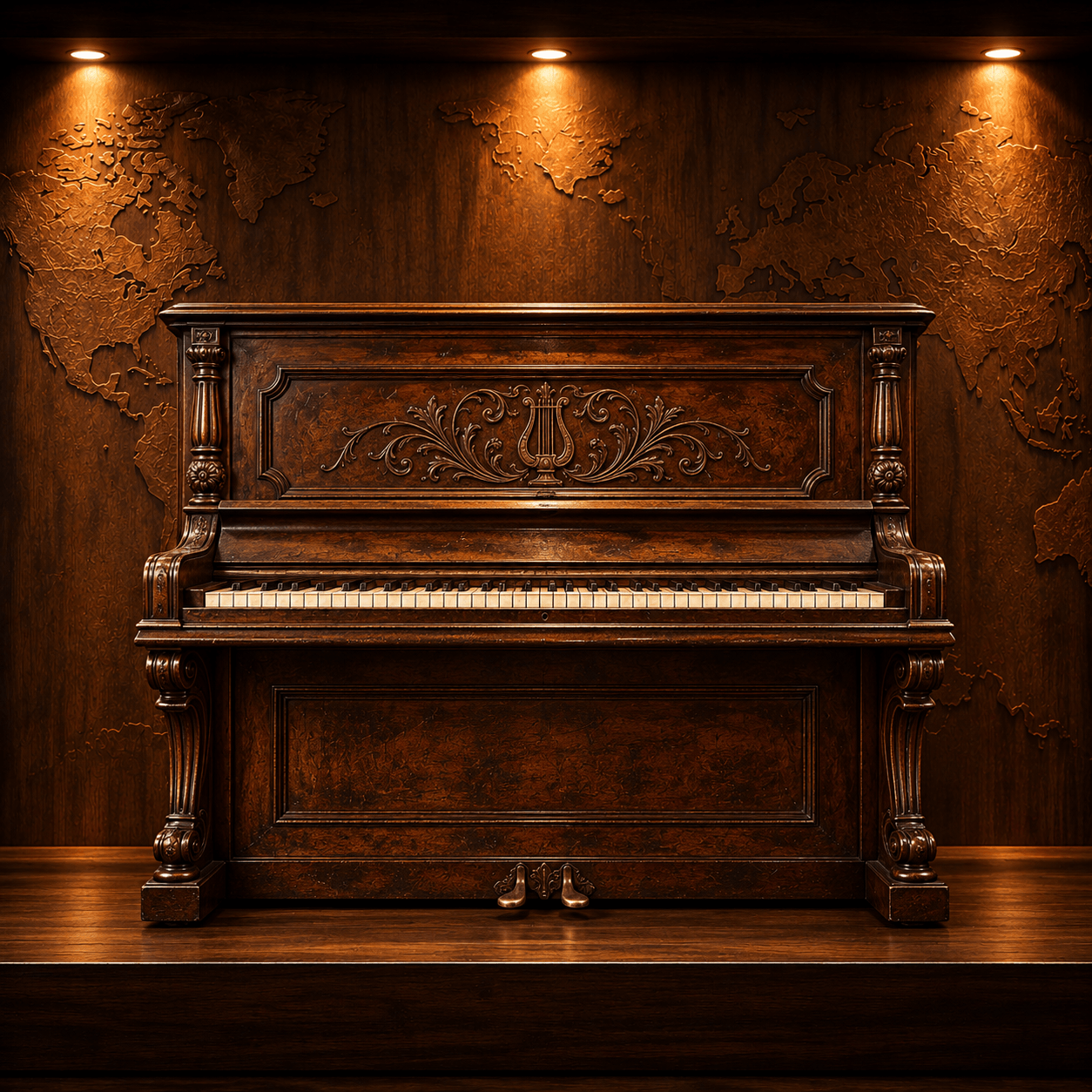
The piano is especially important in its composed concert repertoire. Ensemble recordings and regional dance traditions present other instrumental combinations.
When studying an example, identify which instrument carries the melody, which establishes the pulse and how the accompaniment supports its accents.
Performance Practice
A convincing performance gives attention to the relationship between the three-beat framework and the musical phrase.
Dance accompaniment needs to support movement clearly. Piano interpretations may use more flexible timing and detailed changes in tone. These approaches should be understood in relation to their purpose and tradition.
Chopin’s works combine inherited influences with original composition; they should not be treated as direct transcriptions of a single folk performance.
Dance
Mazurka choreography varies between Polish traditional, ballroom and regional practices. Steps may involve travelling, turning and accented movement, with different arrangements for couples or groups.
A demonstration should identify the style being presented. Learning one regional version provides an introduction to that practice without representing every form of Mazurka.
Experience the Rhythm
Listening Guide
Begin by counting three beats and noticing where the strongest accents fall.
Then:
- Follow a repeated melodic phrase.
- Listen for emphasis on the second or third beat.
- Notice changes in pace and articulation.
- Compare dance accompaniment with a solo piano work.
- Watch how movement corresponds with musical accents.
Notation and Musical Examples
A useful example would show a short phrase in 3/4 with its accent pattern marked.
Comparing examples from a Polish dance, a concert mazurka and a regional adaptation would reveal how similar musical foundations can support different interpretations. Each example should identify its composer or performer, region and source.
Related Rhythm
Explore Mazur, Kujawiak and Oberek for its Polish dance connections. Compare Waltz, Polka and Schottische to examine other traditions that circulated internationally.
Origin: Poland.
Documented wider connections: European ballroom and concert traditions; Martinique and the southern Caribbean; Hispanic New Mexico; and the Philippines.
Related Region

Evidence & Sources
This article draws on Polish music research, concert interpretation, archival recordings and documentation of regional dance traditions.
- University of Southern California, Polish Music Center — Mazur / Mazurka
- Polish Music Center — Oberek
- Los Angeles Philharmonic — Chopin’s Mazurkas
- Smithsonian Folkways — Caribbean Folk Music, Vol. 1
- Smithsonian Folkways — Music of New Mexico: Hispanic Traditions
- Philippine National Commission for Culture and the Arts — Philippine Dance in the Spanish Period