Kachu / Cow Horn
The kachu is a natural horn traditionally made from a cow horn and sounded by the player’s lips. Its strong, direct call can function musically and as a signal. In Curaçaoan traditional practice, the kachu is particularly associated with Tambú and Seú, where its rhythmic calls connect musical performance with gathering, agricultural work, procession, and communal movement.
Instrument Classification
Instrument Family:
Instrument Type:
Playing Technique:
Sound Production:
Hornbostel–Sachs Classification:
Primary Material
Origins & Historical Background
Construction
The natural horn is cleaned and hollowed, and an opening is prepared at or near the narrow end for blowing. The wider end remains open as the bell. Because the instrument follows the original curve and dimensions of the animal horn, each kachu is acoustically individual. Some examples may include a shaped blowing rim or small mouthpiece adaptation, which is why detailed classification should follow the actual specimen.
Playing technique
The player forms an embouchure at the blowing opening and buzzes the lips to set the air column in motion. Changes in lip tension and air pressure can select available natural resonances, but the kachu is not a fully chromatic melodic instrument. In traditional practice, short rhythmic calls, repeated tones, and signal-like phrases are more important than a wide pitch range. Breath placement and timing coordinate the horn with dancers, singers, drum, and iron percussion.
Cultural Significance
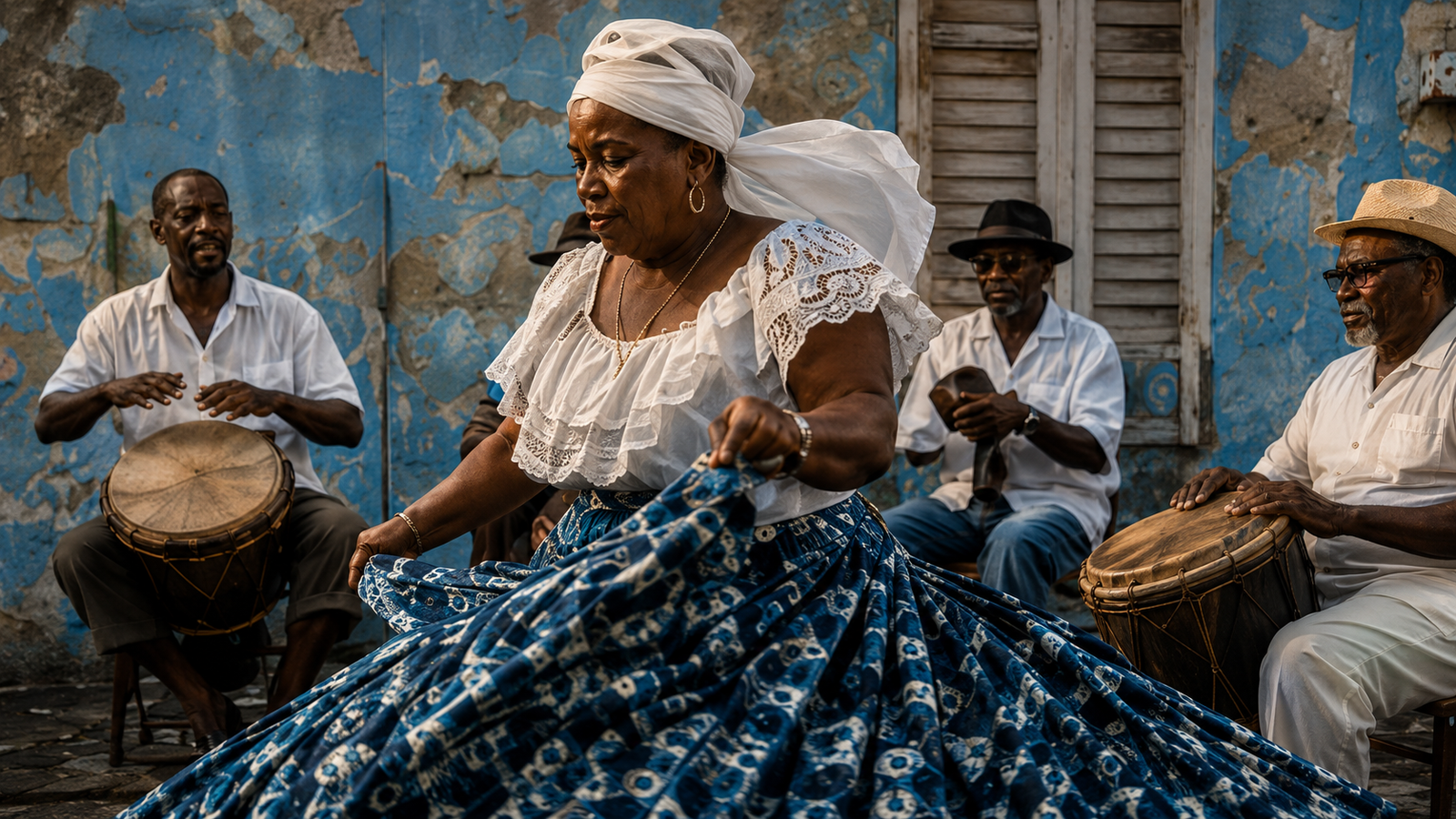
The kachu links music directly to communal communication. In Seú it is associated with harvest movement and the organization of the procession; in Tambú it appears among the basic traditional instruments documented in Curaçao. Its sound carries memories of rural work, gathering, signaling, and Afro-Curaçaoan cultural continuity, making it both an instrument and an acoustic symbol of collective life.